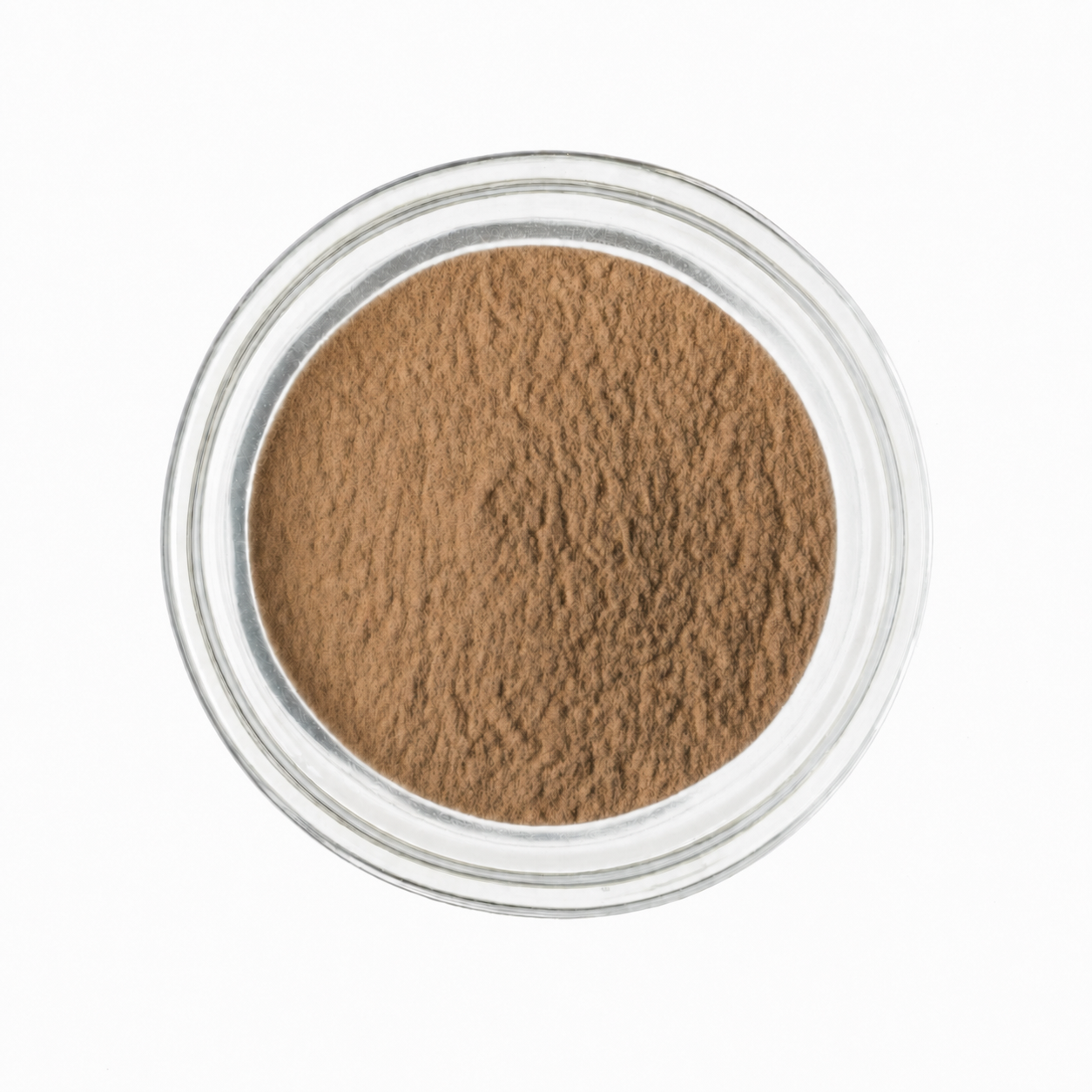
MICROBIAL RENNET POWDER 20000
Rhizomucor miehei Coagulant — Ultra-Concentrated Powder | ≥ 20,000 IMCU/g | EC 3.4.23.23 (Mucorpepsin)
✓ VEGETARIAN ✓ NON-GMO ✓ HALAL CERTIFIED ✓ KOSHER CERTIFIED ✓ ALLERGEN-FREE ✓ JECFA / FCC
1. Product Description
Microbial Rennet Powder 20000 is an ultra-concentrated, food-grade, spray-dried milk-clotting enzyme preparation produced by the submerged fermentation of a carefully selected, non-pathogenic strain of the filamentous fungus Rhizomucor miehei. The active enzyme is Mucorpepsin (EC 3.4.23.23), an aspartic acid endopeptidase that exhibits high specificity for cleaving the Phe105–Met106 bond of κ-casein — the essential step in the enzymatic coagulation of milk.
This product is formulated at a standardized activity of ≥ 20,000 IMCU/g (International Milk Clotting Units per gram), making it one of the most concentrated microbial rennet powders available for industrial cheese production. At approximately 9× the strength of standard-strength rennet powders (~2,200 IMCU/g) and equivalent to ~27× a standard liquid rennet (~750 IMCU/ml), this ultra-concentrated format is engineered for large-scale industrial operations where minimal dosage volumes, reduced storage footprint, simplified inventory management, and precise automated gravimetric dosing are paramount.
The powder format offers inherent advantages over liquid formulations: superior shelf stability, tolerance to broader storage temperature ranges, reduced shipping weight and volume (no water carrier), and elimination of cold-chain dependency for short transport durations. These benefits make MR Powder 20000 the product of choice for cheese manufacturers operating in tropical climates, remote locations, or facilities with limited cold storage capacity.
Rhizomucor miehei coagulant has been used commercially in cheese manufacture since the late 1960s and represents the most widely adopted microbial rennet worldwide. It produces cheeses with excellent curd firmness, clean flavour development during ripening, and high cheese yield comparable to animal-derived chymosin. Its low non-specific proteolytic activity minimises the risk of bitterness in both fresh and aged cheese varieties.
2. Key Characteristics
| Ultra-High Concentration | At ≥ 20,000 IMCU/g, only 2.0–3.0 g per 1,000 L of milk is required for standard cheese types. This extreme concentration reduces dosing volume by ~90% compared to standard powder grades, enabling significant reductions in storage, shipping, and handling costs for high-throughput plants. |
| High Milk-Clotting Specificity | Mucorpepsin selectively cleaves the Phe105–Met106 bond of κ-casein with a high C/P ratio (clotting activity to general proteolytic activity), ensuring efficient coagulation with minimal non-specific casein degradation. This protects cheese yield and prevents bitter peptide formation during maturation. |
| Superior Powder Stability | Spray-dried formulation with controlled water activity (aw ≤ 0.30) provides exceptional shelf stability. Activity loss is approximately 0.5–1% per month at recommended storage (0–8 °C), with acceptable stability even at ambient temperatures (≤ 25 °C). |
| Thermolability in Whey | The enzyme is substantially inactivated by standard whey pasteurisation (72 °C / 15 sec or 63 °C / 30 min), preventing residual proteolysis in WPC, WPI, and infant formula ingredients — protecting downstream whey value. |
| Broad Cheese Suitability | Suitable for fresh, soft, semi-hard, and hard cheeses — including Mozzarella, Cheddar, Gouda, Edam, Feta, Havarti, Paneer, Halloumi, Cottage Cheese, Cream Cheese, Kashkaval, and white brined varieties. |
| Vegetarian & Multi-Faith | 100% microbial origin — no animal-derived ingredients. Certified Halal and Kosher. Suitable for vegetarian, Hindu, Buddhist, and all dietary frameworks that prohibit animal rennet. |
3. Composition & Ingredients
| Component | Description |
|---|
| Active Enzyme | Mucorpepsin (EC 3.4.23.23) — aspartic endopeptidase derived from Rhizomucor miehei |
| Carrier / Diluent | Sodium Chloride (NaCl) — food-grade, provides ionic stability, microbial inhibition, and uniform powder distribution |
| Preservative | None required — low water activity of powder form provides intrinsic microbial stability |
| Allergens | None — does not contain any of the 14 major allergens listed under EU Regulation 1169/2011 or US FDA Big 9 allergens |
| GMO Status | Non-GMO — produced by fermentation of a naturally selected (non-genetically modified) strain of R. miehei. NOT produced using recombinant DNA technology. |
4. Product Specifications
4.1 Physico-Chemical Properties
| Parameter | Specification | Test Method |
|---|
| Milk Clotting Activity | ≥ 20,000 IMCU/g (± 5%) | ISO 11815 / IDF 157 |
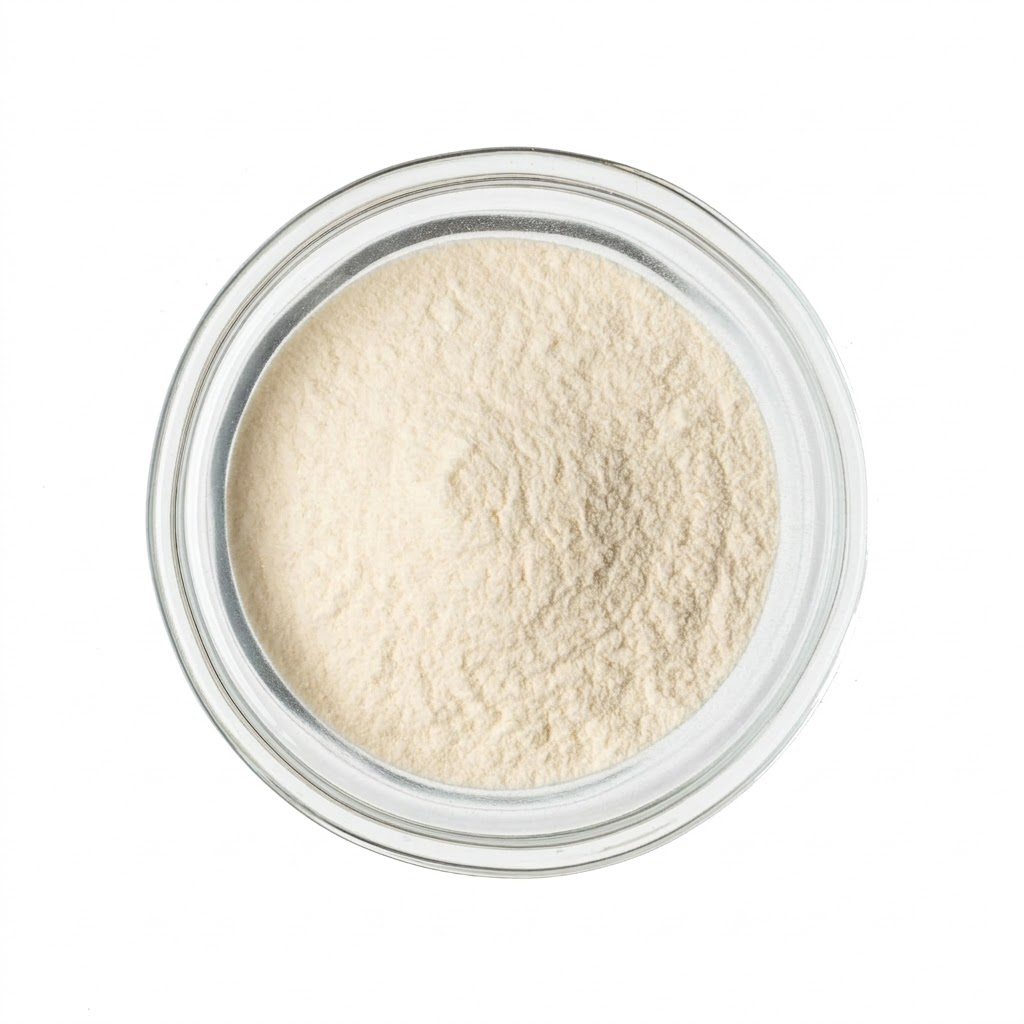
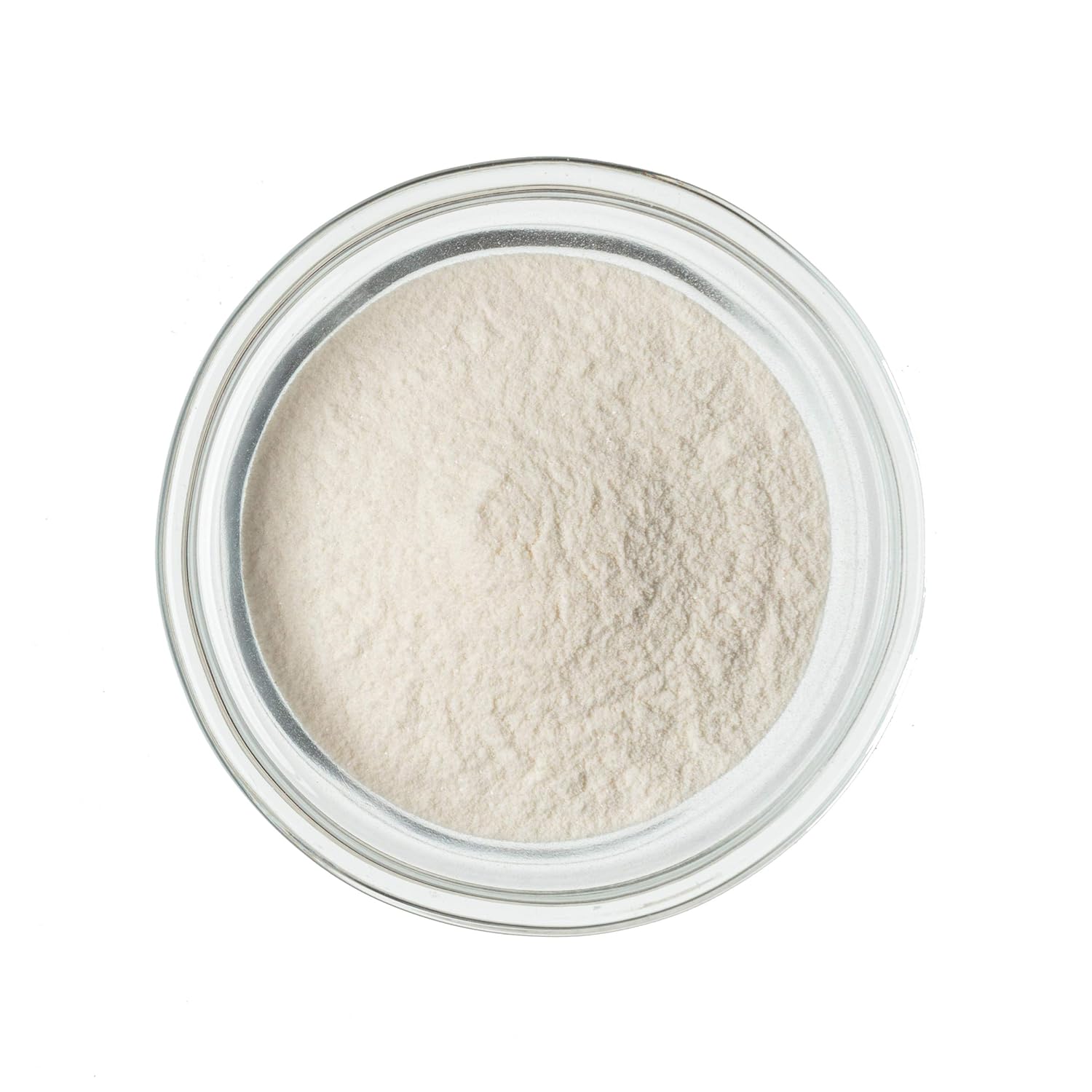
| Physical Form | Off-white to light beige, free-flowing powder | Visual |
| Odour | Typical mild fermentation; neutral, no off-odours | Sensory |
| Loss on Drying (Moisture) | ≤ 8.0% | Oven method 105 °C / 2 h |
| Water Activity (aw) | ≤ 0.30 | Water activity meter |
| pH (1% aq. soln, 20 °C) | 5.0 – 7.0 | Potentiometric (ISO 10523) |
| Bulk Density | 0.40 – 0.65 g/ml | Tapped / poured density |
| Particle Size | ≥ 95% passes 40 mesh (425 μm) | Sieve analysis |
| Solubility | Fully soluble in water within 2 min | — |
| Heavy Metals (as Pb) | ≤ 30 mg/kg | FCC / AAS |
| Lead (Pb) | ≤ 5.0 mg/kg | AAS |
| Arsenic (As) | ≤ 3.0 mg/kg | AAS |
4.2 Microbiological Specifications
| Parameter | Limit | Method |
|---|
| Total Viable Count (TVC) | ≤ 10,000 CFU/g | ISO 4833 / FCC |
| Coliforms | ≤ 30 CFU/g | ISO 4832 |
| Escherichia coli | Absent in 25 g | ISO 16649 |
| Salmonella spp. | Absent in 25 g | ISO 6579 |
| Listeria monocytogenes | Absent in 25 g | ISO 11290 |
| Staphylococcus aureus | Absent in 1 g | ISO 6888 |
| Yeasts & Moulds | ≤ 100 CFU/g | ISO 21527 |
| Antibiotic Activity | Negative | Cylinder plate assay |
5. Application Guidelines & Dosage
⚠ ULTRA-CONCENTRATION NOTICE
Microbial Rennet Powder 20000 is approximately 9× stronger than standard-strength rennet powders (~2,200 IMCU/g), approximately 27× stronger than standard liquid rennets (~750 IMCU/ml), and approximately 100× stronger than retail/artisanal liquid rennets (~200 IMCU/ml). A precision analytical balance (± 0.01 g) is essential for accurate dosing. Pre-dissolution and thorough mixing are absolutely critical.
5.1 Recommended Dosage
| Standard Dosage Range |
| Per 1,000 L of milk | 2.0 – 3.0 g |
| Per 100 L of milk | 0.20 – 0.30 g |
| Per 10 L of milk | 0.020 – 0.030 g (20–30 mg) |
| Total IMCU delivered | ~40,000 – 60,000 IMCU per 1,000 L |
Note: Exact dosage depends on milk composition, standardisation, pasteurisation history, pH, renneting temperature, desired coagulation time, and cheese variety. Always verify by clotting test.
5.2 YOTABIO Grade Comparison
| Grade | Activity | Dosage / 1,000 L | Format |
|---|
| MR 750 L | 750 IMCU/ml | 35 – 60 ml | Liquid |
| MR 2200 L | 2,200 IMCU/ml | 20 – 27 ml | Liquid |
| MR Powder 2200 | 2,200 IMCU/g | 15 – 30 g | Powder |
| MR 3400 L | 3,400 IMCU/ml | 13 – 17 ml | Liquid |
| MR 3700 L | 3,700 IMCU/ml | 4 – 8 ml | Liquid (Ultra) |
| MR Powder 20000 ★ | 20,000 IMCU/g | 2.0 – 3.0 g | Powder (Ultra) |
5.3 Cheese-Type Specific Guidelines
| Cheese Type | Dosage (g/1,000 L) | Renneting Temp. | Set Time | Notes |
|---|
| Mozzarella | 2.2 – 2.8 | 33 – 36 °C | 25 – 35 min | Firm curd for stretching. Good fat retention. Low residual proteolysis preserves stretch and melt. |
| Cheddar | 2.0 – 2.5 | 30 – 32 °C | 30 – 45 min | Clean flavour during long ageing. Smooth texture without bitterness at 6–18 months. |
| Gouda / Edam | 2.0 – 2.5 | 30 – 33 °C | 30 – 40 min | Mild flavour, smooth paste. Suitable for washed-curd process. |
| Feta / White Brine | 2.2 – 2.8 | 32 – 36 °C | 40 – 60 min | Excellent curd structure for brining. Clean tangy profile. All milk types. |
| Paneer / Halloumi | 1.8 – 2.5 | 35 – 42 °C | 20 – 30 min | Firm, heat-stable curd. Higher renneting temperature for unripened types. |
| Fresh / Soft | 1.0 – 1.8 | 28 – 32 °C | 8 – 18 hrs | Low-dose, long-set. Gentle coagulation with acid development. |
| Cottage Cheese | 0.8 – 1.5 | 30 – 32 °C | 4 – 16 hrs | Very low rennet with primary acid coagulation. |
6. Instructions for Use
1
Weigh Required Amount: Using a precision analytical balance (± 0.01 g), weigh the calculated amount. Start with ~2.3 g per 1,000 L and adjust. Even ± 0.5 g significantly affects coagulation.
2
Pre-Dissolution (Critical): Dissolve into 20–40× its weight of cool (15–20 °C), chlorine-free water. Example: 2.5 g → 50–100 ml water. Stir 1–2 min. Chlorine destroys enzyme activity.
3
Verify Milk Readiness: Target temperature 30–36 °C, pH 6.40–6.55 after starter. CaCl₂ addition completed before rennet.
4
Add to Milk: Pour dissolved solution immediately while milk is vigorously stirred. Use within 5 minutes of preparation.
5
Agitate: Stir vigorously 2–3 minutes for homogeneous distribution.
6
Stop & Set: Leave undisturbed until firm coagulum forms (30–45 min typical).
7
Check Firmness: Finger test, knife test, or automated sensor. Cut at appropriate firmness.
⚠ CRITICAL PROCESS NOTES
• Chlorine: Even >0.5 ppm permanently destroys activity. Use verified chlorine-free water.
• CaCl₂: Add 10–20 g/100 L at least 5 min BEFORE rennet. Never mix CaCl₂ directly with rennet powder.
• Temperature: Rate doubles per 5 °C increase (25–42 °C). Control to ± 0.5 °C.
• Precision: 0.5 g error = ±10,000 IMCU — a full standard-strength dose. Use calibrated balances.
• No Pre-Dissolving in Advance: Activity decays rapidly in solution. Use within 5 minutes.
7. Enzyme Activity Profile
7.1 Temperature Profile
| Temp. | Relative Activity | Context |
|---|
| 10 °C | ~5% | Cold renneting (rare) |
| 20 °C | ~20% | Below typical range |
| 30 °C | ~60% | Soft cheeses |
| 35 °C | ~85–90% | Standard renneting |
| 40–42 °C | ~100% | Paneer, Halloumi |
| 50 °C | ~70% | Accelerated loss |
| 55 °C | ~40% | Inactivation begins |
| 65 °C / 10 min | ~10% | Near-complete |
| 72 °C / 15 s | < 5% | Whey pasteurisation |
7.2 pH Profile
| pH | Relative Activity | Context |
|---|
| 4.0 | ~30% | Below cheese range |
| 5.0 | ~75% | Acid-coagulated, feta brine |
| 5.5–6.0 | ~90–100% | Optimal — most cheeses |
| 6.2 | ~95% | Standard renneting pH |
| 6.5 | ~80% | Fresh milk pH |
| 7.0 | ~40% | Reduced at neutral |
💡 Whey Valorisation
The thermolabile nature of R. miehei mucorpepsin at ≥ 72 °C is a critical advantage for whey processing into WPC, WPI, or functional ingredients. MR Powder 20000 minimises residual proteolysis risk in downstream whey products.
7.3 Powder Dissolution & Stability
| Parameter | Specification | Notes |
|---|
| Dissolution Time | < 2 min at 15–20 °C | Gentle stirring, chlorine-free water |
| Dissolution Ratio | 1 : 20 to 1 : 40 (w/v) | Higher ratios improve distribution |
| Solution Stability | Use within 5 minutes | Rapid activity loss in solution |
| Dry Stability (0–8 °C) | ~0.5–1.0% loss/month | Superior to liquid equivalents |
| Dry Stability (15–25 °C) | ~1.5–3.0% loss/month | Acceptable for transport |
8. Storage & Shelf Life
| Parameter | Specification |
|---|
| Storage Temperature | 0 °C to 8 °C (optimal 2–6 °C). Acceptable ≤ 25 °C for up to 18 months. Do NOT store above 30 °C. |
| Protect From | Direct sunlight, heat, moisture, and temperature fluctuations. Keep tightly sealed. |
| Freezing | Acceptable but not recommended. Equilibrate to ambient in sealed packaging before opening. |
| Shelf Life (0–8 °C) | 24 months from manufacture in original sealed packaging. |
| Shelf Life (15–25 °C) | 18 months from manufacture in dry conditions. |
| Activity Decay | 0.5–1.0%/month at 0–8 °C. 1.5–3.0%/month at 15–25 °C. |
| After Opening | Reseal with desiccant. Use within 3 months. Never return dissolved rennet to container. |
| Transport | Cold chain not required — ambient ≤ 25 °C up to 4 weeks. Insulated packaging for tropical routes. |
📦 Powder vs. Liquid — Logistics Advantages
Weight: ~90% less shipping weight per IMCU. Cold chain: Not required ≤ 4 weeks. Shelf life: 24 months vs. 12 months. Storage density: ~10× more IMCU/m³. Freeze tolerance: Not damaged by accidental freezing.
9. Packaging
| Pack Size | Container Type | Recommended For |
|---|
| 500 g | Aluminium foil pouch, heat-sealed, with desiccant | Trials, artisanal cheese makers |
| 1 kg | Aluminium foil bag in HDPE jar, tamper-evident | Small plants, pilot production |
| 5 kg | HDPE drum with foil inner liner & desiccant | Medium cheese plants |
| 10 kg | HDPE drum / fibre drum with PE liner | Medium to large plants |
| 25 kg | Fibre drum with double PE liner & desiccant | Large-scale industrial |
All packaging is food-grade, moisture-barrier protected, and recyclable. Each container labelled with product name, batch number, production/expiry dates, net weight, activity (IMCU/g), storage instructions, and regulatory statements. Desiccant included in all sizes.
10. Regulatory & Certification
| Parameter | Details |
|---|
| Food-Grade Standard | Complies with JECFA (FAO/WHO) and FCC specifications. |
| EU Regulation | Regulation (EC) No. 1332/2008. Long history of safe use in EU cheese production. |
| US FDA | GRAS status. 21 CFR 184.1685. |
| Codex Alimentarius | Recognised coagulant under CXS 206-1999. |
| Halal | Certified Halal. Certificate available on request. |
| Kosher | Certified Kosher. Certificate available on request. |
| Vegetarian | Suitable for vegetarian diets. No animal-derived ingredients. |
| Allergens | Allergen-free. EU 1169/2011 Annex II and US FDA Big 9 compliant. |
| GMO Status | Non-GMO. Compliant with EC 1829/2003 and 1830/2003. |
| Manufacturing | ISO 9001 · ISO 22000 · HACCP · CFAA member. |
11. Troubleshooting Guide
| Problem | Possible Cause | Corrective Action |
|---|
| No / weak coagulation | Chlorinated water; expired/damaged enzyme; low dose; cold milk; high pH | Verify chlorine-free water. Check storage/expiry. Increase dose. Temp ≥ 30 °C, pH ≤ 6.55. |
| Too fast (<15 min) | Over-dosage; high temp; low pH; excess CaCl₂ | Recalibrate balance. Reduce dose 10–20%. Verify temp and pH. |
| Weak/fragile curd | Poor mixing; incomplete dissolution; low protein | Full dissolution. 2–3 min mixing. Protein ≥ 3.2%. Add CaCl₂. |
| Bitter aged cheese | Over-dosage; contamination; high ageing temp | Reduce dose. Verify weighing. Control ripening temperature. |
| Uneven coagulation | Incomplete dissolution; insufficient mixing | Always pre-dissolve 20–40× water. Stir 2–3 min. Distribute evenly. |
| Caked powder | Moisture ingress; damaged packaging | Seal with desiccant. Test activity if caked. |
| Inconsistent set times | Variable milk; temp fluctuation; weighing errors | Standardise milk. Calibrate probes and balance. |
12. Technical Support & Contact
YOTABIO provides comprehensive technical support including: application trials, dosage optimisation, process troubleshooting, regulatory documentation (CoA, allergen statements, Halal/Kosher certificates, Non-GMO declarations), and custom product development.
PRODUCT QUICK REFERENCE — MR POWDER 20000
| Product Name | Microbial Rennet Powder 20000 |
| Enzyme | Mucorpepsin (EC 3.4.23.23) from Rhizomucor miehei |
| Activity | ≥ 20,000 IMCU/g |
| Format | Free-flowing powder (spray-dried) |
| Standard Dosage | 2.0 – 3.0 g per 1,000 L milk |
| Shelf Life | 24 months (0–8 °C) / 18 months (15–25 °C) |
| Certifications | Vegetarian · Non-GMO · Halal · Kosher · Allergen-Free · JECFA/FCC |
| Pack Sizes | 500 g · 1 kg · 5 kg · 10 kg · 25 kg |
YOTABIO Microbial Rennet — Full Product Range
| Grade | Activity | Format | Dosage / 1,000 L | Best Suited For |
|---|
| MR 750 L | 750 IMCU/ml | Liquid | 35 – 60 ml | Artisanal plants |
| MR 2200 L | 2,200 IMCU/ml | Liquid | 20 – 27 ml | Medium to large |
| MR Powder 2200 | 2,200 IMCU/g | Powder | 15 – 30 g | Export, ambient storage |
| MR 3400 L | 3,400 IMCU/ml | Liquid | 13 – 17 ml | Industrial automated |
| MR 3700 L | 3,700 IMCU/ml | Liquid (Ultra) | 4 – 8 ml | Very large-scale |
| MR Powder 20000 ★ | 20,000 IMCU/g | Powder (Ultra) | 2.0 – 3.0 g | Large industrial; tropical |
DISCLAIMER: The information in this Technical Data Sheet is based on our current knowledge and is believed accurate at publication. It does not constitute a warranty of product properties. Dosage recommendations are guidelines — optimal dosage must be determined through trials with your own milk supply and process conditions. YOTA BIO-ENGINEERING CO., LTD. reserves the right to modify specifications without prior notice.
© 2026 Yota Bio-Engineering Co., Ltd. All Rights Reserved. | Document Ref: TDS-MRP20000-Rev.01