

How to preapre natamycin solution in salami molds control
Jun 22, 2026
Natamycin
Dipping Solution
for Salami
Usage in Australia &NZ; FSANZ Compliant
Natural mould inhibitor to help protect the surface of dry fermented sausages.
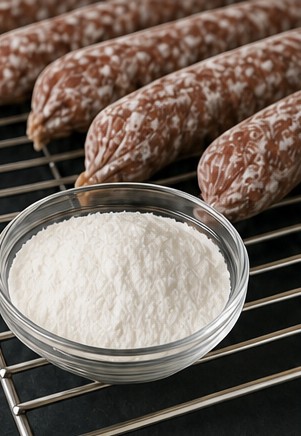
What is Natamycin?
- Natural antifungal produced by Streptomyces natalensis.
- Effective against a wide range of moulds and yeasts.
- Does not affect lactic acid bacteria used in fermentation.
- Ideal for dry fermented sausages such as salami.
Function in Salami
- Inhibits mould growth on the surface during ripening and storage.
- Helps maintain product appearance and quality.
- Extends shelf life.
- Supports food safety.
Usage Level
The maximum level of natamycin in the finished food is 1.2 mg/dm² of surface.
Example compliance check:At 1,500 ppm dip × 35 mL/m² pickup = 52.5 mg/m² = 0.525 mg/dm². Even at 2,000 ppm with heavier pickup, you stay under the legal limit of 1.2 mg/dm².
Preparing the Dipping Solution
Standard recipe — 100 L dipping tank
Preparation steps
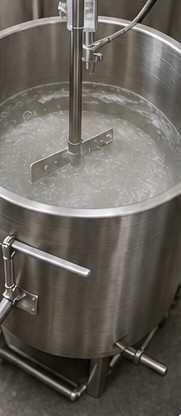
- Fill the dip tank with clean potable water at 15C-25 C. Do not use hot water — natamycin degrades quickly above 40C.
- Pre-disperse the natamycin powder in ~5 L water with gentle stirring for 2–3 minutes to wet the powder and break up clumps. Natamycin has very low water solubility (~30C;50 mg/L), so the working bath is a suspension, not a true solution — this is normal and correct.
- Add the pre-dispersed slurry to the main tank under continuous stirring.
- Check pH: it should sit naturally at pH 5.0–7.0. Natamycin is most stable in this range; pH below 4 or above 8 accelerates degradation.
- Keep the tank covered when not in use — natamycin is photosensitive and direct UV/sunlight degrades it.
- Maintain gentle continuous agitation during dipping to keep the suspension uniform. A simple paddle stirrer or recirculation pump works.
Dipping the Salami
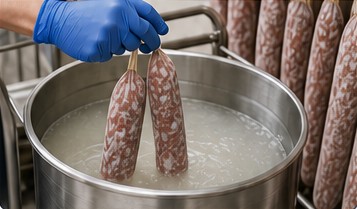
- Dip the freshly stuffed and tied salami sticks or pre-fermented sticks, depending on the production line for 3–10 seconds, fully immersed.
- Hang and let drain for 30–60 seconds before transferring to the fermentation/drying chamber.
- Typical pickup on a salami casing is around 30–40 mL per m² of surface, which deposits roughly 0.6–0.8 mg natamycin per dm² — comfortably below the 1.2 mg/dm² FSANZ ceiling and giving a useful safety margin.

Legal Compliance Summary (Australia)
Regulatory Standard
Australia New Zealand Food Standards Code, Standard 1.3.1 — Food Additives
Permitted Under
Schedule 15 · Food Category 8.3.1
Additive
Pimaricin (natamycin) INS 235
Maximum Permitted Level
1.2 mg/dm² of surface (3–5 mm depth including the casing)